By Ryan J. McDonell, CPA, MSA, MSLT,
Tax Director
Among new tax strategies for businesses, there is a tax provision to immediately and fully expense the cost of certain new manufacturing and production facilities. This incentive, known as the special depreciation allowance for Qualified Production Property (QPP), was signed into law to encourage domestic investment in production infrastructure.
Recent guidance from the IRS has provided a clearer roadmap for businesses looking to capitalize on this opportunity. In short, if your business is planning to build, expand, or acquire a production facility, you may be able to write off 100% of the qualifying real property costs in the year the property is placed in service.
What is Qualified Production Property?
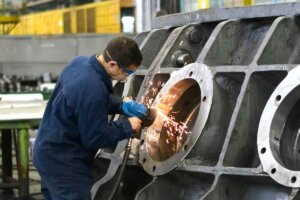
Photo source: www.pexels.com
QPP is the portion of a nonresidential building in the U.S. that is used as an integral part of a “qualified production activity.” To qualify, construction on the property must begin after January 19, 2025, and before January 1, 2029. The property must then be placed in service after July 4, 2025, and before January 1, 2031. While the incentive generally targets new property, a special exception allows businesses to fully expense certain used properties. This exception applies as long as the property was not used for production activities by any previous owner during a specific look-back period and is acquired from an unrelated party.
A “qualified production activity” (QPA) is defined as the manufacturing, production, or refining of a product that results in its “substantial transformation.” This includes activities essential to the production process, such as the receiving and storage of raw materials within the same facility. However, portions of a building used for non-production functions—such as administrative offices, sales activities, parking, or research and development—are generally excluded and do not qualify for immediate expensing.
Many production facilities have both qualifying (shop floor) and non-qualifying (office) spaces. In these cases, businesses must allocate the building’s cost basis between the eligible and ineligible portions. The IRS allows for any reasonable method, such as using square footage, cost segregation studies, or architectural plans. If 95% or more of a property’s physical space is used for a qualified production activity, a de minimis rule provides that the entire property can be treated as QPP.
This incentive is not limited to brand-new construction. Certain qualified improvement property (QIP) made to a pre-existing manufacturing facility may also qualify as QPP. This allows businesses to benefit from modernizing their current operations, not just from building from the ground up.
Leasing Exceptions
The general rule states that if you own a property and lease it to another company, you cannot claim the QPP benefit because you are not the one conducting the production activity. However, the IRS has provided exceptions for common business structures:
• Consolidated Groups: If one member of a consolidated corporate group owns and leases a facility to another member of the same group, they are treated as a single taxpayer. The property’s eligibility is determined by the manufacturing activities of the lessee company using the facility.
• Pass-Throughs: Another exception applies when a pass-through entity such as a partnership or S-corporation or an individual leases property to a commonly controlled business. If there is at least 50% common ownership between the lessor and the lessee, the leasing arrangement is disregarded, and eligibility is based on the lessee’s production activities.
Depreciation Recapture 10-Year Lookback
Businesses should be aware of the 10-year lookback period. If a property ceases to be used for a qualified production activity within ten years of being placed in service, a portion of the tax benefit will be “recaptured” and taxed as ordinary income.
Looking Ahead
The new QPP rules offer an opportunity for businesses in the manufacturing, production and refining sectors to significantly lower their tax burden and accelerate return on investment in new facilities. Current IRS guidance is considered interim, with more detailed proposed regulations expected in the future. The rules are complex, and proper planning is essential to ensure compliance. If your business is considering an investment in production facilities, we can help you navigate the requirements and determine how this new incentive can support your growth.
See also: Understand Your Supply Chain During Tariff Uncertainty